Quality auto
brake service

Brakes are essential for safe driving, so keep your vehicle's brakes in working order with a visit to Jay's Service Center. We have been servicing cars on Long Island since 1975, handling all of your brake issues.

50+

Years in business Serving Long Island since 1975
Licensed & insured NY State License #130-2567

1 Year / 12,000 Miles

Parts & Labor Warranty
Foreign & domestic All Makes & Models Volkswagen Specialists

Our brake services

  • Brake repairs
  • Brake inspections
  • Brake diagnostics
  • Brake maintenance
  • Tune-ups
  • Check engine light checks

Free estimates

When you trust us with your vehicle, you know exactly what your repairs are going to cost with our free estimates. And we back our work with a 1-year / 12,000-mile parts and labor warranty.

Brake warning signs

Is it time for brake service?

Your brakes usually give you warning signs when something isn't right. Tap everything you've noticed. We'll explain what it can mean and add it to your visit note.

Symptom explorer · educational only

Choose a symptom above

See what each warning sign can mean and get a clear description ready for the Jay's team.

This page can't diagnose your car or tell you whether it's safe to drive. An inspection can.

All five warning signs, explained
  • Squealing noises. Often the first sign the pads are getting thin: many pads have a small metal wear indicator that squeals when the friction material is low. Dust, moisture, glazed pads or loose hardware can cause a squeal too. If the squeal keeps coming back, schedule a brake inspection. The sound alone doesn't tell us which part is responsible.
  • Grinding sounds. Grinding can mean the pads are worn through and metal is touching metal, which damages rotors quickly. A stuck stone or a problem outside the brakes can also grind. Avoid unnecessary driving and have it checked promptly. If stopping power feels reduced, don't drive the car.
  • Vibration when braking. A pulsing pedal or a shaking steering wheel when you stop often points to rotors with uneven thickness. Worn suspension parts, wheels or tires can feel similar. Have it inspected before assuming the rotors need replacing. We measure them against your car's specifications.
  • Pulling to one side. Pulling under braking can come from a sticking caliper, uneven pad wear or a brake hose problem. Tires, alignment and suspension can also pull the car, so testing finds the real cause. If the car is hard to control, stop driving it and arrange professional help.
  • Brake warning light. A red brake light can mean the parking brake is on, the brake fluid is low or the system has a fault. An amber ABS light is different: it points to the anti-lock system. Check your owner's manual and have it looked at soon. If the light is on and the pedal feels soft or sinks, don't drive the car.

Under the wheel

How your brakes work

Your braking system uses several key parts working together to slow and stop your car safely. Pressing the pedal sends hydraulic pressure to each wheel, where friction does the rest.

Tap a part on the photo to see what it does and what we check.

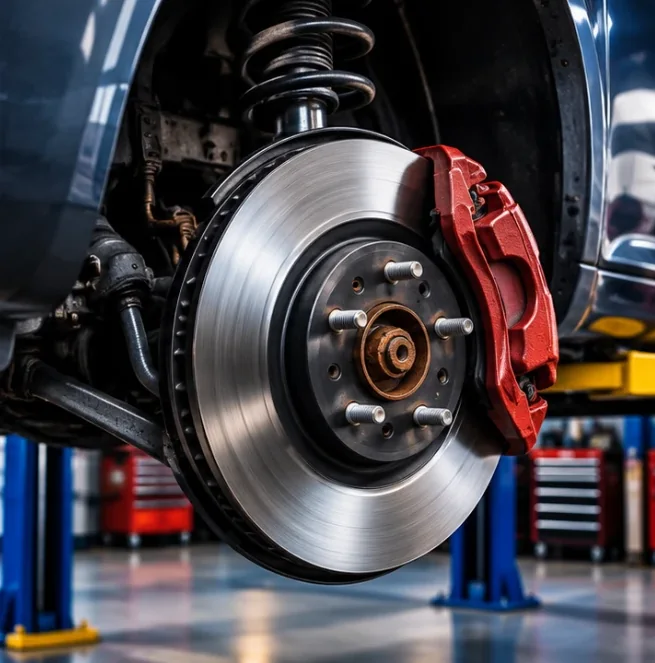
Illustrative photo of a front brake: drilled brake rotor with a red brake caliper, mounted on a car in a repair shop
Brake rotor

The disc that turns with the wheel. The pads clamp against it to slow you down. We check it for scoring, cracks, heat damage and thickness against the vehicle's specifications.

Worn vs. new brake pads
A badly worn, rusty brake pad on the left next to a new brake pad on the right, on a steel workbench
Worn padReplaceNew padGood

A new pad starts with a thick layer of friction material. As it wears thin, it has less to give, and once it's gone the metal backing can reach the rotor. We measure what's left and tell you honestly whether yours need replacing yet.

  • Brake rotor: The disc that turns with the wheel. The pads clamp against it to slow you down. We check it for scoring, cracks, heat damage and thickness against the vehicle's specifications.
  • Brake caliper: Uses hydraulic pressure from the brake pedal to squeeze the pads against the rotor. A sticking piston or slide pin, a leak or worn hardware can cause pulling, uneven wear or dragging.
  • Brake pads: The friction material that does the stopping. The pads sit inside the caliper, against both faces of the rotor, so in this photo they're mostly hidden. We measure how much material is left during an inspection.

Illustrative photos. Brake designs vary by vehicle and not every part is visible here. We check the actual condition of your brakes before recommending any repair.

Brake basics

Brake problems, explained.

Most brake trouble starts small. Here's what's behind the common warning signs, so you know what to tell us and what we'll look at. Any symptom can have more than one cause, which is why we inspect the car before recommending a repair.

We do brake inspections and repairs on foreign and domestic cars and trucks, and Volkswagens are a specialty. If you're in Massapequa, Massapequa Park, Seaford, Wantagh or Amityville, our shop at 148 Jerusalem Avenue is close by. See the areas we serve.

Pad wear

Pads wear a little with every stop. Stop-and-go driving, heavy loads and riding the brakes wear them faster. Many pads have a wear indicator that squeals when they get low; if it's ignored, the backing plate can reach the rotor and start to grind.
Rotors and vibration

Rotors wear too. They can get scored, overheat or develop uneven thickness, which you feel as a pulsing pedal or a shaking wheel. Whether a rotor can stay in service depends on its condition and the minimum thickness the manufacturer specifies.

Calipers and hardware

A caliper that sticks can keep a pad dragging on the rotor. Signs include pulling, a hot or burning smell after driving, and one side wearing faster than the other. Slide pins, clips and seals all play a part.

Brake fluid and hydraulics

Pressing the pedal pushes brake fluid through lines and hoses to each wheel. A leak, air in the system or old fluid can make the pedal feel soft, spongy or sink toward the floor. Fluid service intervals vary, so follow your owner's manual.

Warning lights

The red brake light can mean the parking brake is on, the fluid is low or there's a system fault. The amber ABS light points to the anti-lock system; your regular brakes may still work, but the anti-lock assist might not. Either one deserves a check.

Repair or wait?

We measure pads and rotors against the specifications for your car and tell you what needs attention now and what can safely wait. Brakes are usually serviced in pairs on the same axle so both sides stop evenly.

Your brake system, point by point.

Tap a label to see what each part does and what we look at during a brake inspection.

Checkpoint 1 of 6

Front brakes

On most cars the front brakes do most of the stopping work, so their pads and rotors usually wear faster. We check pad thickness, the rotor surfaces and the calipers.

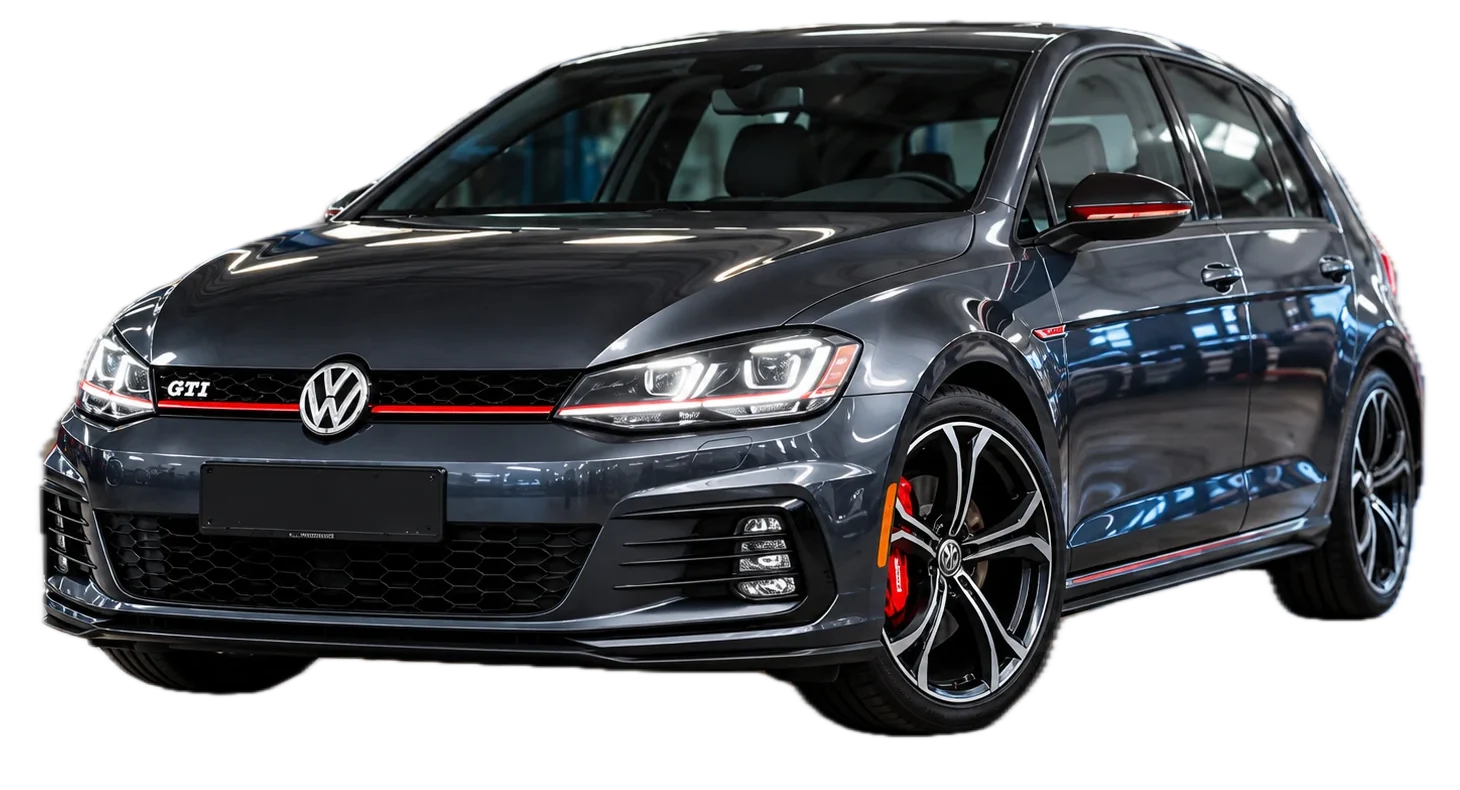
A dark gray Volkswagen GTI

General overview. Brake designs vary by vehicle; we'll show you what's on yours.

  1. On most cars the front brakes do most of the stopping work, so their pads and rotors usually wear faster. We check pad thickness, the rotor surfaces and the calipers.

  2. Rear brakes may be discs or drums. We look at pad or shoe wear, the rotors or drums, and for any leaks.

  3. Lines and hoses carry brake fluid to every wheel. We check them for leaks, cracks, rust or rubbing.

  4. Pressing the pedal pushes fluid from the master cylinder to the brakes. We check for leaks and the fluid level and condition.

  5. We make sure the parking brake engages and holds the car the way it should.

  6. A brake warning light on the dash can point to low fluid, the parking brake or a system problem. It's worth checking soon.

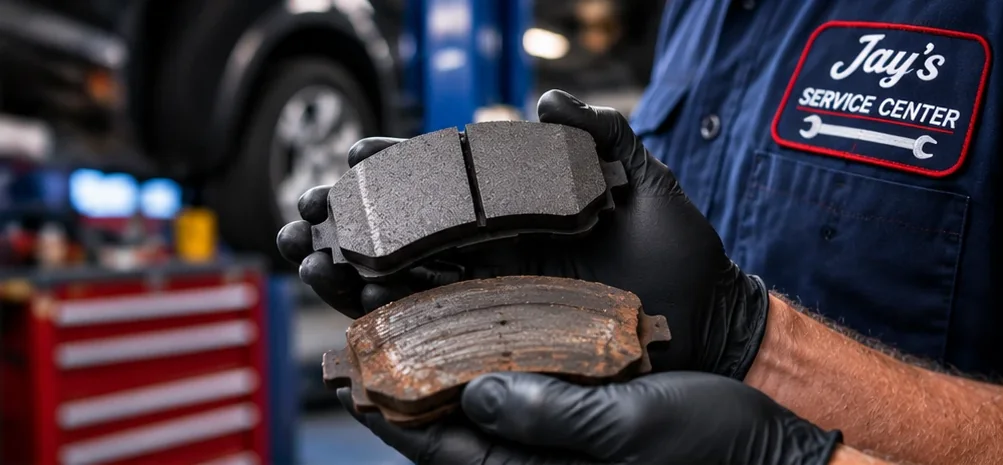
Squeal vs.
grind.

The noise your brakes make is a clue. Here's what the two most common ones can mean.

Gloved hands holding a worn, rusted brake pad under a new brake pad

A high-pitched squeal

Often the first sign that brake pads are getting thin, though dust or moisture can cause it too.

What we check

Look for: Many pads have a built-in wear indicator that squeals; Can come and go, especially in wet weather; A good time to have the pads measured.

We measure the pads, look at the rotors and check the calipers and hardware, then tell you what's needed and what can wait.

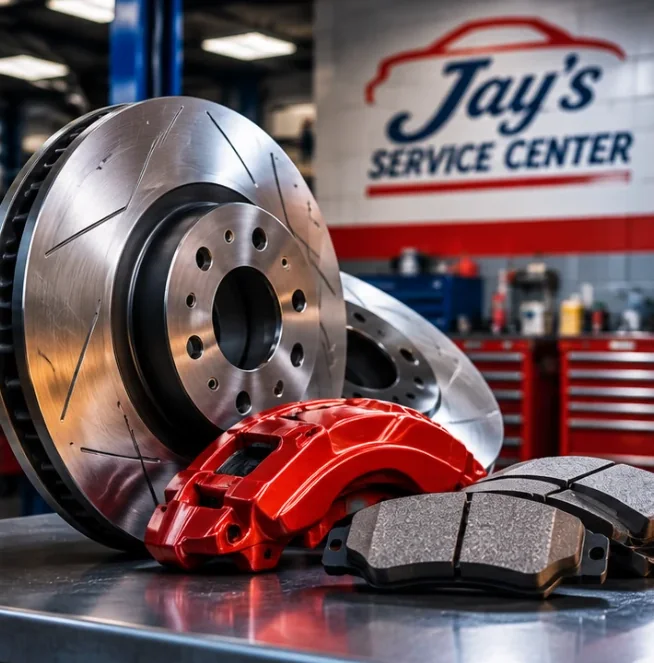
New brake rotors and pads on a workbench in the shop

A harsh grinding

Can mean the pads are worn through and metal is touching metal. Get it checked as soon as you can.

Why it matters

Look for: Can damage the rotors the longer it goes; Stopping distance can get longer; Don't put it off.

Worn-through pads can score the rotors, which can turn a pad job into a bigger repair. If you hear grinding, call us at 516-541-1300.

From concern to confidence

Our brake service process

No work starts until you've seen the estimate and said yes.

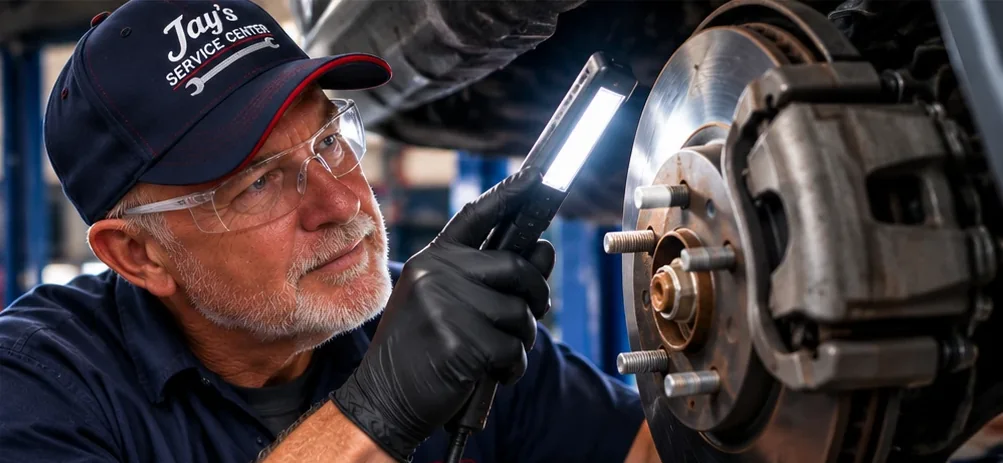
  1. Jay Rapp inspecting a front brake with a flashlight

    1. Inspect

    We check the pads or shoes, rotors or drums, calipers, brake lines and fluid.

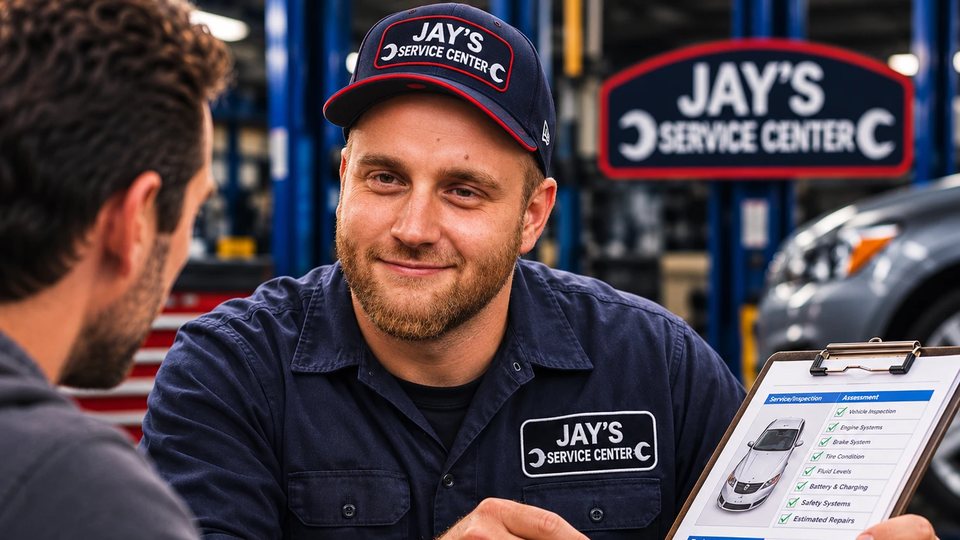
  2. John Hetherington going over an inspection checklist with a customer

    2. Explain

    We show you what we found, explain what needs to be done now and what can wait, and give you a free estimate.

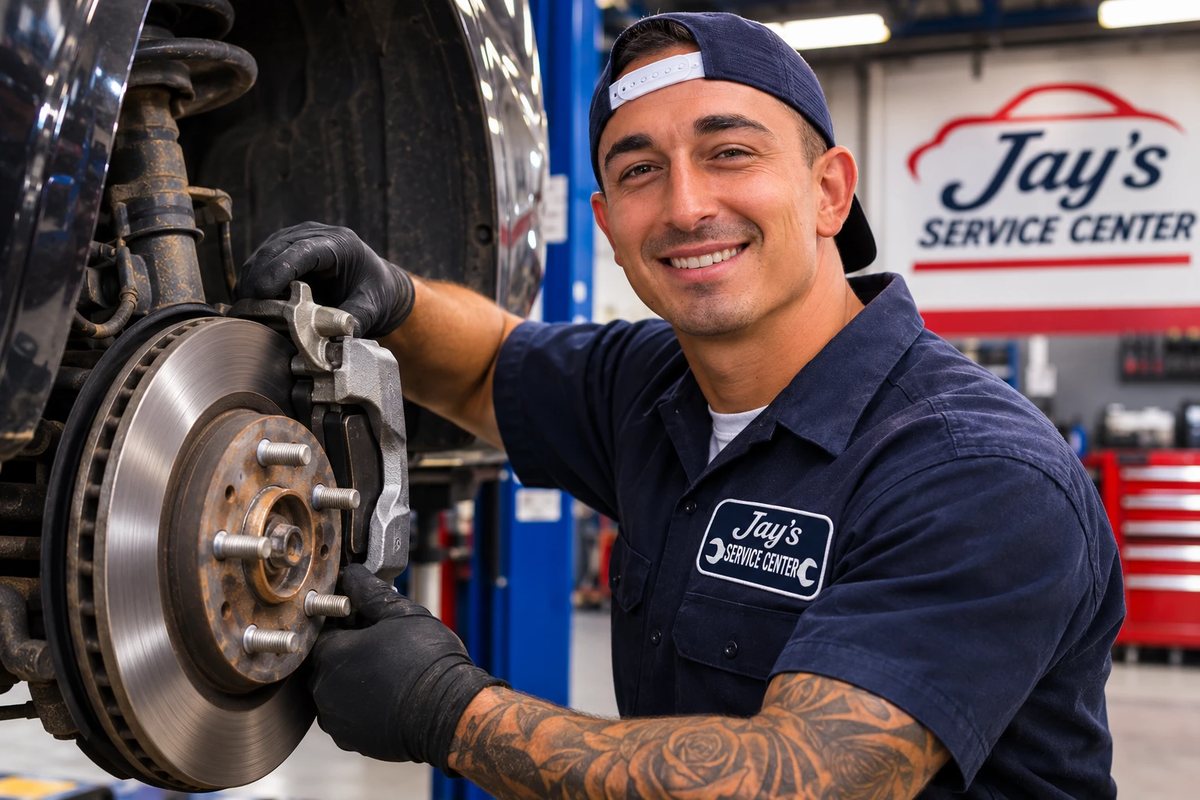
  3. AJ Rapp fitting a brake caliper over a rotor on a car up on the lift

    3. Repair

    Once you say go, we do the work with the right parts for your car, backed by our 1-year / 12,000-mile parts and labor warranty.

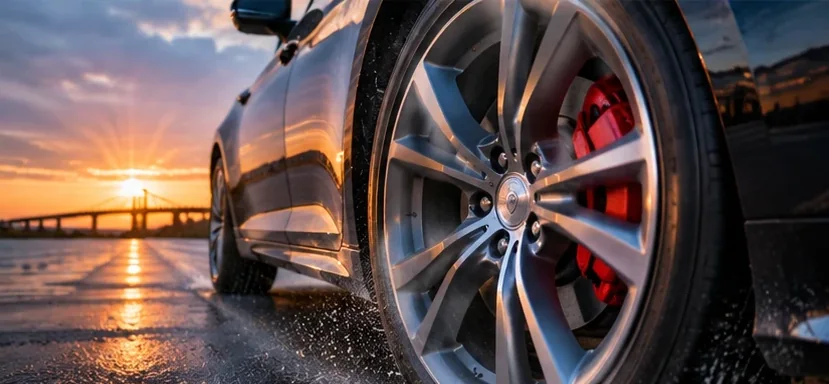
  4. A car back on the road at sunset, its red brake caliper visible behind the wheel

    4. Verify

    Before you pick it up, we check our work to make sure your brakes are operating the way they should.

A smarter service request

Bring the right information to Jay's.

The symptoms you choose above turn into a short note for your service request. It doesn't diagnose your car or collect any personal information. It just helps you describe what you're noticing.

Help us find it faster.

A few quick notes help us find the problem faster.

Your brake visit note

What you've noticed

  • No symptoms chosen yet.

Your note

Choose the symptoms you've noticed and your note will appear here.

Nothing here is saved or sent. Your note only goes to Jay's if you send the request form or read it to us on the phone. If braking feels reduced, grinding is severe or the brake warning light comes on with a soft pedal, stop driving and get professional help.

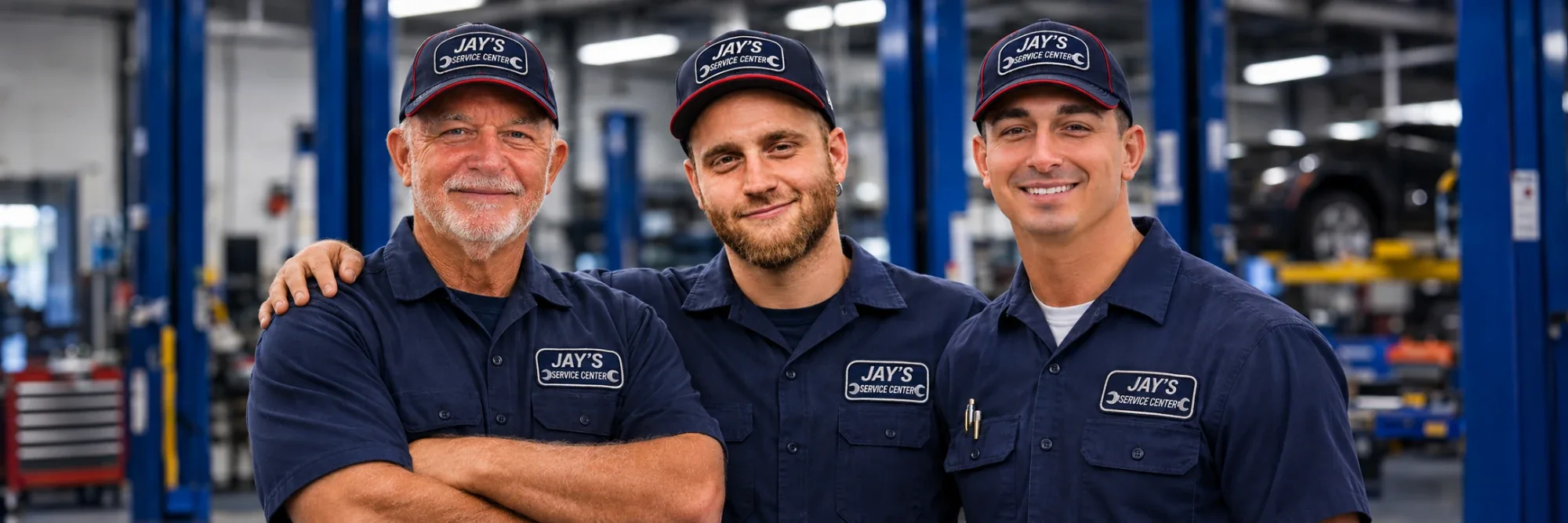
Jay Rapp, John Hetherington and AJ Rapp in Jay's Service Center uniforms in the shop

The Jay's difference

  • Family-run in Massapequa since 1985, fixing cars since 1975
  • Straight answers: we'll tell you if your brakes still have life left in them, not just sell you a brake job.
  • Free estimates before any repair
  • Repairs backed by a 1-year / 12,000-mile parts and labor warranty
  • Foreign and domestic cars and trucks, with real Volkswagen know-how

Real service.
Real people.
A shop you can trust.

Frequently
asked questions

How do I know if I need new brakes?

Squealing, grinding, a soft or sinking pedal, pulling to one side when you stop, vibration when braking, or a brake warning light are all good reasons to have them checked.

Do I always need new rotors with new pads?

Not always. It depends on the rotors' condition and thickness. We'll look and tell you honestly whether they need to be replaced.

Is it safe to drive with a brake warning light on?

Have it checked as soon as you can. It can mean low brake fluid or a problem in the system. If the pedal feels soft or sinks, don't drive the car.

Why does my car pull when I brake?

A sticking caliper, uneven pad wear or a problem with a brake hose are common causes. We'll find which one it is.

Do you give estimates before starting?

Yes. Every brake job starts with a free estimate, and our work is backed by a 1-year / 12,000-mile parts and labor warranty.

How often should my brakes be inspected?

There's no single schedule for every car. Your owner's manual is a good guide, and it's smart to have them looked at during routine service, or right away if you notice any warning signs.

What can make brakes wear out faster?

Stop-and-go driving, heavy loads or towing, and riding the brakes all add wear. A sticking caliper or worn hardware can too, which is why we look at the whole system.

Do you work on Volkswagen brakes?

Yes. We do brake work on foreign and domestic cars and trucks, and Volkswagens are a specialty of ours.

Ready for straight answers?

Free estimate on every repair. 1-year / 12,000-mile parts and labor warranty.

At 148 Jerusalem Ave in Massapequa, serving Seaford, Wantagh, Bethpage, Farmingdale and nearby towns. See the areas we serve →

Call now Request service